The Transformative Power of Sales Coaching: Insights from Recent Research

The Quick Take
Imagine a sales team struggling to close deals that should have been straightforward. They rehash their presentations, but the results remain stagnant, and frustration begins to mount. The problem often isn’t the product or the leads—it’s a
Imagine a sales team struggling to close deals that should have been straightforward. They rehash their presentations, but the results remain stagnant, and frustration begins to mount. The problem often isn’t the product or the leads—it’s a lack of targeted guidance. This is where effective sales coaching enters the picture, transforming potential obstacles into streamlined paths for success.
Research-Backed Insights
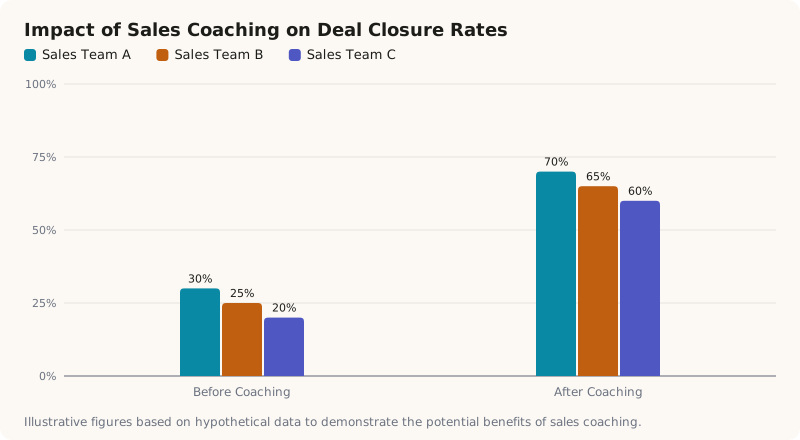
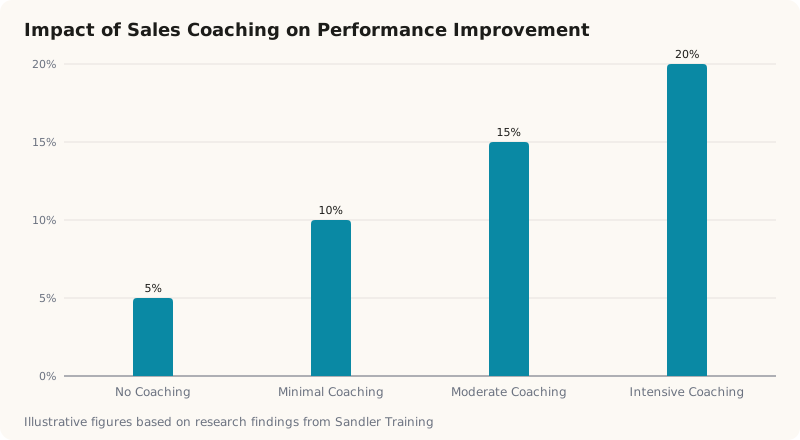
Recent studies emphasize the critical role of sales coaching in increasing performance. According to a study by the Sandler Training, organizations that prioritize coaching see a sales performance improvement of up to 20%. This is no minor detail; it speaks volumes about the potential for growth when coaching is strategically implemented.
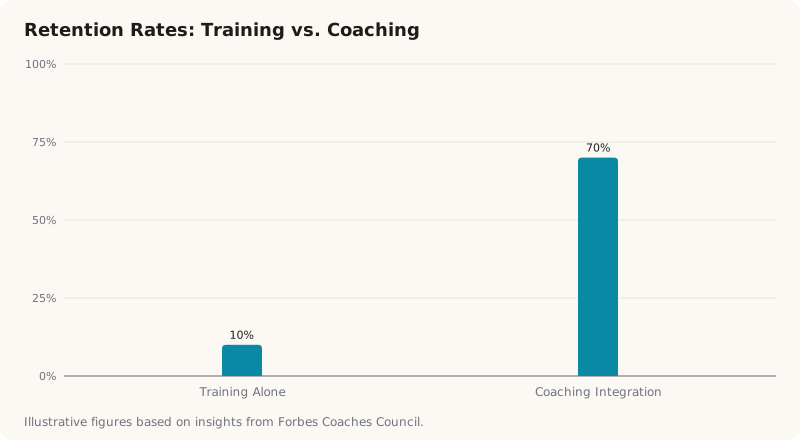
Moreover, sales training alone is not a sufficient remedy without ongoing coaching. A report from the Forbes Coaches Council highlights that only 10% of participants retain knowledge from traditional training without practical application in a coaching scenario. Simply put, training provides the information, but coaching facilitates application—leading to tangible results.
Concrete Benefits of Sales Coaching
The benefits are multi-faceted, touching on various areas that resonate with sales directors and CEOs alike:
- Enhanced Skill Accuracy: Coaching provides personalized feedback, helping sales teams refine their skills. This ensures that they are not just practicing rote selling techniques, but mastering the art of sales which is crucial in a B2B context.
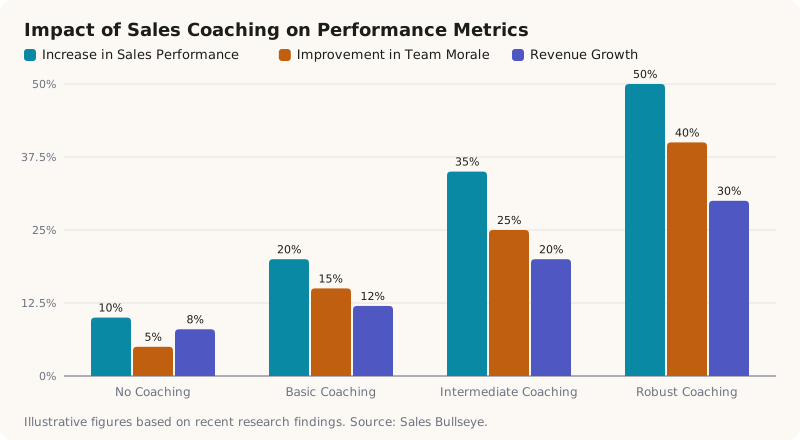
- Improved Morale and Engagement: Teams that receive consistent coaching report higher levels of satisfaction and engagement. Engaged employees are 87% less likely to leave the organization, reducing turnover costs significantly.
- Revenue Growth: As the aforementioned Sandler study indicates, effective coaching leads directly to improved sales performance—which translates to more closed deals, higher revenue, and ultimately, a better bottom line.
Practical Tips for Implementing Sales Coaching
If you’re considering integrating sales coaching into your strategy, here are some actionable steps to consider:
| Actionable Step | Description | Estimated Impact (%) | Timeframe (Months) |
|---|---|---|---|
| Assess Current Sales Skills | Evaluate existing sales team's skills and identify gaps | 25 | 1 |
| Set Clear Objectives | Define what you want to achieve through coaching | 20 | 1 |
| Select Qualified Coaches | Choose coaches with proven expertise and industry knowledge | 30 | 2 |
| Implement Regular Training Sessions | Schedule bi-weekly coaching sessions | 40 | 3 |
| Measure Progress and Outcomes | Regularly track and assess improvements | 35 | Ongoing |
| Seek Feedback | Collect feedback from sales team to adjust methods | 15 | Ongoing |
| Encourage Knowledge Sharing | Promote sharing successful strategies among team members | 20 | 2 |
| Cultivate a Coaching Culture | Foster an environment that values continuous learning | 50 | 6 |
- Set Clear Objectives: Begin by defining what success looks like for your team. Specific, measurable goals aligned with broader business objectives will offer a roadmap for coaching efforts.
- Leverage Data: Use sales data to identify areas where individual team members struggle. This helps tailor coaching sessions to address specific weaknesses rather than adopting a one-size-fits-all approach.
- Encourage Continuous Feedback: Create a culture where feedback is embraced. Regular check-ins not only provide ongoing learning opportunities but also reinforce the notion that coaching is a continuous process, not a one-time intervention.
Conclusion
Investing in sales coaching is not merely a box to tick off—it's a strategic decision with far-reaching implications for performance and revenue growth. As shown by recent research, organizations that embrace a robust coaching framework are better positioned to navigate the complexities of B2B sales. While the road to implementing effective coaching might require resources and time, the potential payoff in terms of sales effectiveness and team morale makes it an invaluable component of your sales strategy. Embrace coaching as an investment in your team’s future success—and watch your sales figures reflect that change.
Ready to Audit Your Pipeline?
Get a high-level Training Needs Assessment for your sales organization.
About Nabeel Khalid
Nabeel is the founder of Sales Bullseye. He has trained hundreds of B2B sales professionals across Pakistan and the United States in the Bullseye Method — a high-integrity, methodology-led approach to complex deal closure built on retention, not one-off workshops.