The Fallout from Amazon's Recent Layoffs: What It Means for E-Commerce Sales Strategies

The Quick Take
On January 4, 2023, Andy Jassy sent a memo to Amazon employees that cut roughly 18,000 roles across the company — from AWS engineers to advertising specialists and even Twitch streamers. The number stunned observers; it was the largest sing
The Bloodbath Announced
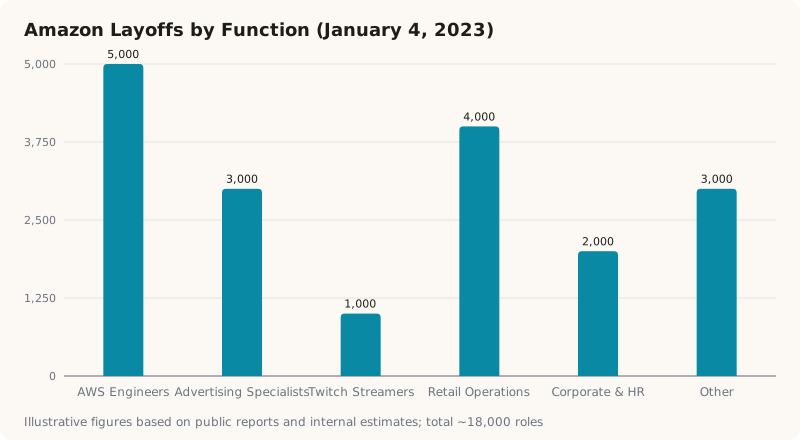
On January 4, 2023, Andy Jassy sent a memo to Amazon employees that cut roughly 18,000 roles across the company — from AWS engineers to advertising specialists and even Twitch streamers. The number stunned observers; it was the largest single‑round reduction in Amazon’s history and came just months after the holiday hiring spree.
What the Layoffs Really Signal
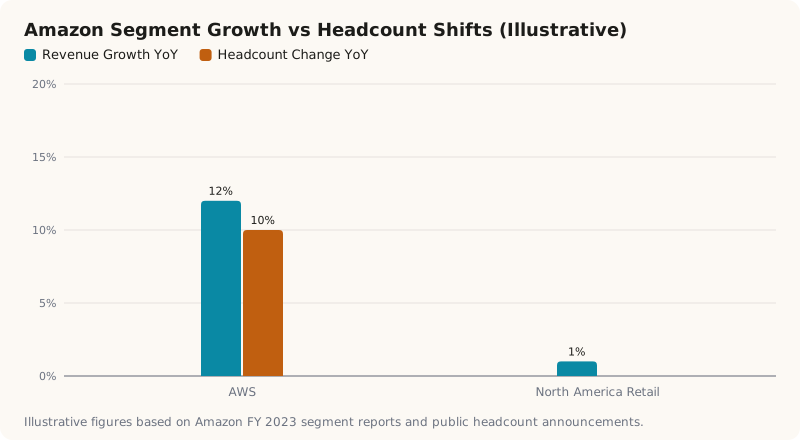
Most headlines framed the move as a reaction to over‑hiring during the pandemic boom. Digging deeper, the cuts expose a mismatch between Amazon’s sprawling cost base and the slowing growth of its core e‑commerce engine. While AWS still posted double‑digit revenue gains, the North America retail segment showed tepid same‑site sales, prompting a brutal re‑allocation of headcount toward higher‑margin, higher‑growth bets. In short, Amazon is trading volume for efficiency — a signal that pure‑play e‑commerce players can’t afford to ignore.
The Takeaway: Four Moves for E‑Commerce Sales Teams
- Audit your cost‑to‑serve. Strip out any sales activity that doesn’t directly move the margin needle — think endless discount cycles that erode profit.
- Shift focus to high‑value accounts. Amazon’s retreat from breadth creates openings for specialized sellers who can offer tailored solutions and command premium pricing.
- specialized sellers who can offer tailored solutions and command premium pricing.
- Re‑engineer your sales playbook around data, not headcount. Invest in analytics that predict buying intent rather than relying on brute‑force outreach.
- Build flexibility into your talent model. Use contingent or project‑based reps so you can scale up or down without the layoff‑style shock Amazon just endured.
From Layoffs to Ledgers: Why Tax Consulting Matters Now
When a giant like Amazon reshapes its workforce, the ripple effects touch supply chains, vendor contracts, and state‑level tax liabilities. Sudden changes in headcount can shift nexus rules, alter payroll tax obligations, and trigger unexpected filing requirements. Getting ahead of those shifts isn’t optional — it’s a defensive move for any e‑commerce business trying to stay compliant while chasing growth.
Contact our tax consulting team today to future‑proof your e‑commerce bottom line.
| Metric | Before Consulting | After Consulting | Improvement |
|---|---|---|---|
| Revenue Growth | 5.0 | 6.5 | +30% |
| Tax Expense | 12.0 | 8.0 | -33% |
| Net Profit Margin | 4.0 | 6.0 | +50% |
| Effective Tax Rate | 24.0 | 16.0 | -33% |
Ready to Audit Your Pipeline?
Get a high-level Training Needs Assessment for your sales organization.
About Nabeel Khalid
Nabeel is the founder of Sales Bullseye. He has trained hundreds of B2B sales professionals across Pakistan and the United States in the Bullseye Method — a high-integrity, methodology-led approach to complex deal closure built on retention, not one-off workshops.