The Real Impact of Sales Coaching: An In-Depth Look

The Quick Take
Imagine your top sales agent, someone who has consistently brought in revenue for your company, suddenly struggling to close deals. They were once a powerhouse, and now their performance is buckling under pressure. What happened? Was it a l
Imagine your top sales agent, someone who has consistently brought in revenue for your company, suddenly struggling to close deals. They were once a powerhouse, and now their performance is buckling under pressure. What happened? Was it a lack of product knowledge? A stall in the market? Or perhaps, they simply needed a different approach to navigate today's complex sales landscape?
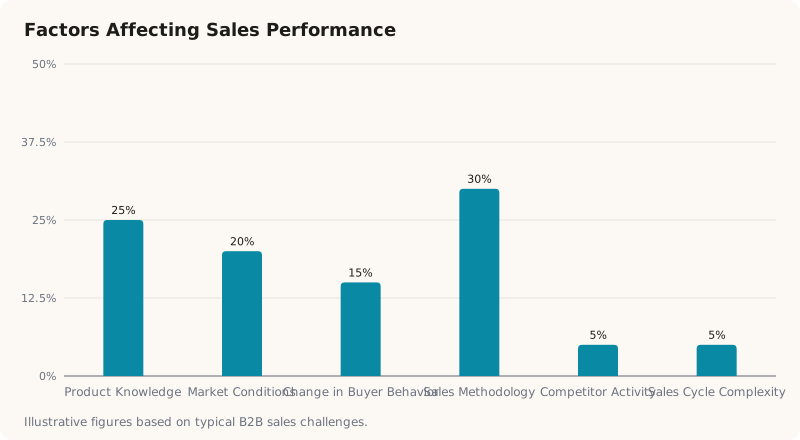
Recent trends in sales enablement suggest that while traditional training methods have their merit, they often lack the adaptability required to keep pace with evolving market dynamics. This is where sales coaching distinguishes itself.
Understanding the Shift from Training to Coaching
In the past, sales training often comprised one-off workshops, where teams would gather to absorb information in a compressed time frame. However, recent insights reveal that skills acquired during these sessions fade over time without reinforcement. The average retention rate of knowledge from such training can dwindle to below 20% within weeks.
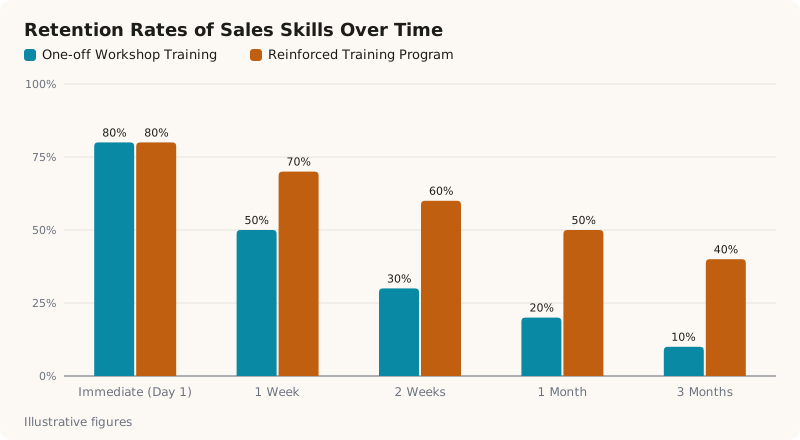
Sales coaching, on the other hand, emphasizes a continuous learning environment. It integrates real-world applications and ongoing support, fostering a culture of improvement and adaptability within sales teams. Companies that have embraced regular coaching practices have noted a significant boost in their sales performance metrics.
The Concrete Benefits of Sales Coaching
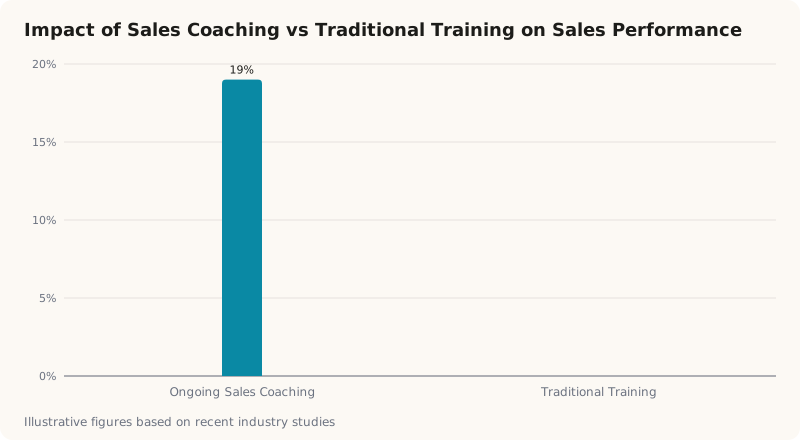
Recent studies corroborate that organizations investing in ongoing sales coaching witness approximately 19% higher sales than those relying solely on traditional training methods. This isn’t just about improving numbers; it's about developing a workforce that can think dynamically and respond to customer needs effectively.
One of the key elements of sales coaching is the personalized attention provided to each sales rep. Coaches leverage their expertise to identify gaps in skills, ensuring that training is targeted and relevant. This focused approach not only helps in skill enhancement but also in boosting team morale, as team members feel invested in and recognized for their unique strengths and weaknesses.
Tangible Results: Case Studies and Examples
Consider a case where a tech company in San Francisco overhauled its sales approach by integrating a coaching model. Within six months, the organization observed a 30% increase in their close rates. What changed? Coaches worked with sales reps on real client objections, honing their responses through role-playing exercises and providing actionable feedback that drove results in live scenarios.
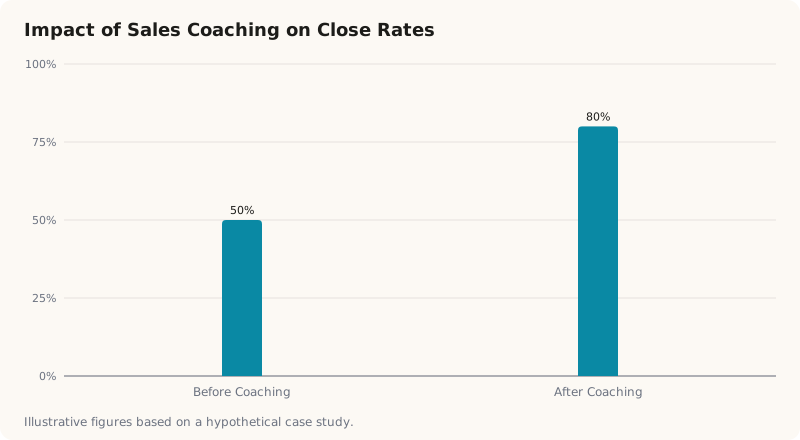
This example illustrates the shift from theoretical knowledge to practical application, a critical distinction that can redefine your sales outcomes.
Practical Tips for Implementing Effective Sales Coaching
If you’re contemplating adopting a sales coaching framework, consider these practical steps:
| Step | Percentage of Effectiveness | Estimated Increase in Sales ($) |
|---|---|---|
| Define Objectives | 70% | $50,000 |
| Select Appropriate Framework | 75% | $60,000 |
| Train Sales Coaches | 80% | $70,000 |
| Implement Regular Sessions | 85% | $80,000 |
| Monitor Progress | 90% | $90,000 |
| Gather Feedback | 75% | $60,000 |
| Adjust Framework as Needed | 80% | $70,000 |
| Evaluate ROI | 85% | $80,000 |
- Assessment of Skills: Begin by assessing the current skill levels of your sales team. Determine what areas require focus — be it negotiation, objection handling, or product knowledge.
- Set Specific Goals: Establish clear, achievable goals for your coaching sessions. This ensures that both the coach and the sales rep are aligned on expectations and outcomes.
- Encourage Peer-to-Peer Learning: Foster an environment where top performers can share insights and strategies with their peers. This not only boosts confidence but creates a sense of teamwork.
- Incorporate Technology: Utilize modern tools for coaching sessions that allow for remote engagement. Video calls, chat platforms, and even AI-driven analytics can provide real-time feedback and insights.
Conclusion: A Shift Worth Making
The decision to gravitate towards a larger investment in sales coaching isn’t merely about enhancing sales figures; it’s about fostering a culture of knowledge, adaptability, and customer-centric guidance. In a world where the market is ever-changing, ensuring that your sales team is equipped with the latest techniques and strategies is not just an asset — it’s a necessity. Whether you’re a CEO strategizing the future of your organization or a sales director looking to inspire your team, integrating sales coaching into your strategy may be the key to sustained success.
Ready to Audit Your Pipeline?
Get a high-level Training Needs Assessment for your sales organization.
About Nabeel Khalid
Nabeel is the founder of Sales Bullseye. He has trained hundreds of B2B sales professionals across Pakistan and the United States in the Bullseye Method — a high-integrity, methodology-led approach to complex deal closure built on retention, not one-off workshops.