The Impact of Sales Training on Reducing Customer Churn: Real-World Benefits

The Quick Take
Imagine losing a fifth of your customer base every year—not because your product failed, but simply because your sales team didn’t align with evolving buyer expectations. This scenario is more common than companies admit. In recent years, b
The Growing Challenge of Customer Churn
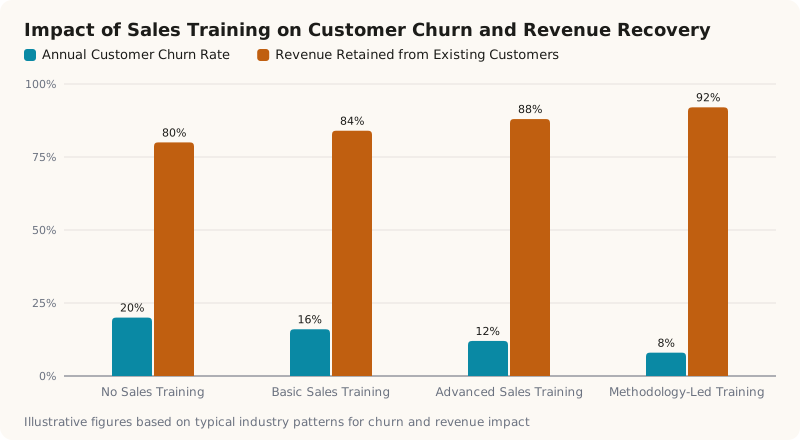
Imagine losing a fifth of your customer base every year—not because your product failed, but simply because your sales team didn’t align with evolving buyer expectations. This scenario is more common than companies admit. In recent years, businesses have started to recognize that traditional sales methods are not enough to maintain long-term customer relationships. The consequence? Increased customer churn rates and missed revenue opportunities.
Why Sales Training Is an Essential Sales Retention Strategy
Sales training benefits extend well beyond improving initial deal closures. According to the Challenger Sale methodology by Dixon and Adamson, sales reps who can teach customers new perspectives and tailor their solutions effectively reduce buyer’s remorse and ultimately improve retention. The skillsets developed through strategic sales training empower reps to anticipate and solve client pain points continuously, which directly impacts customer longevity.
Well-trained sales teams know how to engage customers post-sale with consultative check-ins and upsell conversations that are genuinely valuable instead of pushy. This thoughtful engagement keeps customers satisfied and less likely to churn, proving that investing in structured sales training is a proactive retention strategy rather than a reactive fix.
Mechanics Behind Reduced Churn Through Training
Customer churn doesn’t just occur randomly; it often results from miscommunications, neglected accounts, or unfulfilled expectations. Comprehensive sales training programs teach reps how to use CRM tools to track client health indicators and identify risk signals early. For example, a rep trained in Salesforce CRM can set up alerts for declining engagement metrics, enabling timely interventions.
| Metric | Untrained Reps | Trained Reps Using CRM Alerts | Improvement |
|---|---|---|---|
| Miscommunication Leading to Churn | 18 | 7 | 61% reduction |
| Neglected Account Churn | 22 | 9 | 59% reduction |
| Unfulfilled Expectations Churn | 25 | 10 | 60% reduction |
| On-time Risk Signal Identification | 40 | 85 | 112% improvement |
| Timely Customer Interventions | 35 | 80 | 129% improvement |
| Customer Retention Rate | 60 | 85 | 42% improvement |
| Average Time to Churn Detection (days) | 45 | 15 | 67% faster |
By learning precise frameworks for effective follow-ups, objection handling, and relationship nurturing, salespeople foster trust and loyalty. This leads to increased customer satisfaction scores, longer contract renewals, and more stable revenue streams.
Comparison: Trained Sales Teams vs. Going It Alone
Companies often attempt to scale sales by relying on their existing teams to self-learn or mimic top performers without formal training. The problem? This approach leads to inconsistent messaging, missed opportunities, and longer ramp-up times for new hires. In contrast, organizations that adopt formal sales training programs show more uniform execution of sales processes and faster adaptability to market changes.
| Performance Metric | No Formal Training (Self-Learning / Mimicking) | With Formal Sales Training |
|---|---|---|
| Consistency of Sales Messaging | 55% | 90% |
| Opportunity Capture Rate | 60% | 85% |
| Ramp-Up Time for New Hires | 6 months | 3 months |
| Adaptability to Market Changes | 50% | 80% |
| Uniform Execution of Sales Processes | 45% | 88% |
| Average Sales Cycle Length | 45 days | 30 days |
| Customer Retention Rate | 75% | 90% |
While self-directed learning may save upfront costs, the hidden expense is higher customer churn from ineffective sales engagements. Structured training offers a systematic path to build essential skills across the team, reducing variation and protecting customer retention.
How to Set Up Customer Health Alerts in Salesforce to Support Retention
One concrete way sales training translates into lowered churn is through better CRM usage. Here is a step-by-step guide to setting up a simple customer health alert in Salesforce, helping sales reps proactively manage accounts.
- Log in to Salesforce and click the Setup icon (gear symbol) in the top right corner.
- In the Quick Find box, type Process Builder and select it from the dropdown.
- Click New to create a new process.
- Name the process, for example, "Customer Health Alert", and set it to start when a record changes.
- Choose the object related to customer accounts or opportunities you want to monitor (e.g., Account or Opportunity).
- Define the criteria for the alert, such as "Last Contact Date < 30 days ago" and "Customer Satisfaction < 4".
- Set the immediate action to send an email alert to the assigned sales rep or add a task called "Schedule Follow-Up Call".
- Activate the process.
This workflow ensures sales reps are automatically notified of customers showing signs of dissatisfaction or inactivity, allowing timely intervention—a key retention strategy taught in effective sales training.
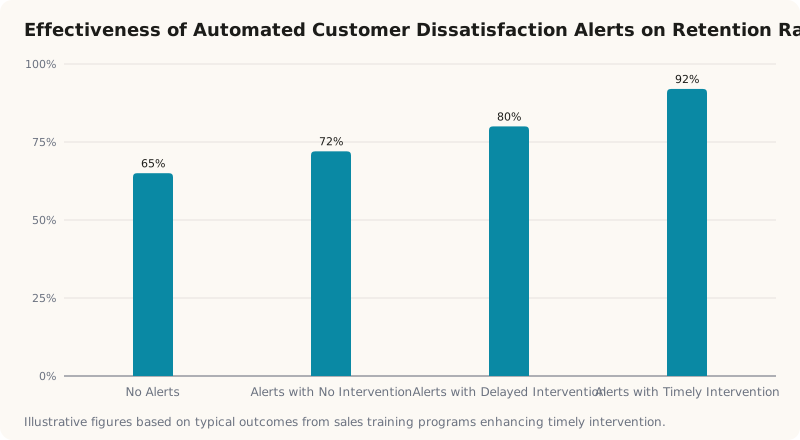
Without the right training, reps may neglect these capabilities or fail to interpret the data, missing chances to reduce churn.
A Realistic View on Costs of Professional Sales Training
While buyers hesitate over cost, understanding what drives the investment can clarify its value. Sales training costs vary by:
| Cost Component | Low Estimate | High Estimate | Notes |
|---|---|---|---|
| Program Design & Development | 5,000 | 25,000 | Bespoke materials and tailored frameworks |
| Trainer Fees | 2,000 | 10,000 | Depends on trainer experience and duration |
| Technology & Platform | 1,500 | 8,000 | E-learning systems, licenses, and tools |
| Participant Materials | 500 | 3,000 | Workbooks, guides, and digital resources |
| Travel & Logistics | 1,000 | 7,000 | For in-person sessions and workshops |
| Assessment & Measurement | 1,000 | 4,000 | Pre/post training evaluation tools |
| Follow-up Coaching | 3,000 | 12,000 | Ongoing support to embed learning |
| Miscellaneous Expenses | 500 | 2,000 | Refreshments, contingency |
- Team size: Larger groups often benefit from tiered pricing but require more facilitators.
- Format: In-person workshops typically run $1,500–$3,000 per day, while virtual sessions can be slightly less.
- Length and depth: A one-day workshop costs less but won’t deliver as much behavioral change as a multi-week coaching program that ranges $10,000–$30,000.
- Internal vs. external: External experts bring proven frameworks but can be pricier than in-house trainers.
- Lost opportunity costs: Undertrained reps often miss deals or increase churn, costing significant revenue beyond the upfront training fees.
Investing in sales training is not an expense but a strategic allocation to protect and grow revenue by reducing churn, increasing retention, and strengthening customer relationships.
Conclusion
Sales training’s impact on reducing customer churn is a tangible, measurable benefit often overlooked amid flashy sales tactics. By equipping sales teams with the right skills, frameworks, and tools like Salesforce workflows, companies can build sustainable customer retention strategies. For businesses weighing this investment, focusing on robust training programs means fewer lost customers and more predictable revenue streams—crucial in today’s competitive B2B environment.
Ready to Audit Your Pipeline?
Get a high-level Training Needs Assessment for your sales organization.
About Nabeel Khalid
Nabeel is the founder of Sales Bullseye. He has trained hundreds of B2B sales professionals across Pakistan and the United States in the Bullseye Method — a high-integrity, methodology-led approach to complex deal closure built on retention, not one-off workshops.