The Untapped Potential of Sales Coaching: A Practical Guide for Driving Sales Performance

The Quick Take
Imagine you’re the head of a thriving tech company on the verge of launching your next big product. Your sales team is motivated, well-versed, and equipped with cutting-edge tools. Yet, the product launch flops; your sales numbers are below
Imagine you’re the head of a thriving tech company on the verge of launching your next big product. Your sales team is motivated, well-versed, and equipped with cutting-edge tools. Yet, the product launch flops; your sales numbers are below expectations. What went wrong? Was it the product? The market? More often than not, the missing piece is effective sales coaching.
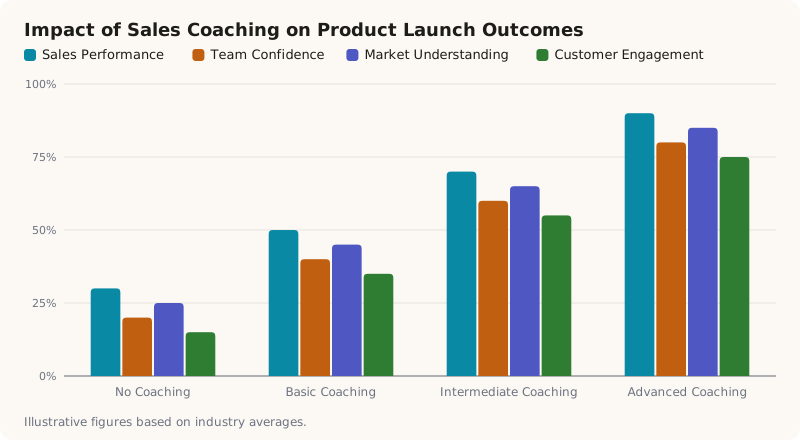
In a landscape where competition is fierce and customers have more choices than ever, simply having a great product isn’t enough. Sales performance hinges significantly on the continual development of your salespeople. Investing in sales coaching can steer your team from despair into success, igniting the results you’re after.
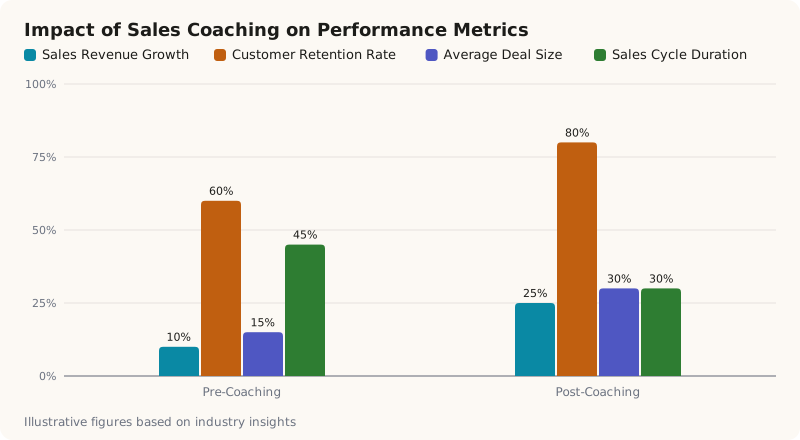
Understanding the Business Value of Sales Coaching
Sales coaching is more than a one-off training session; it’s a strategic investment that sharpens your team's skills, aligns their focus, and catalyzes behavioral changes that lead to improved performance. According to various industry insights, organizations that implement effective sales coaching see up to a 19% boost in sales performance. This isn't about hype; it’s about reality, confirmed through numerous anecdotal success stories across sectors, from tech to retail. For instance, one leading software firm reported a significant uptick in sales after integrating systematic coaching into their culture, underlining the proven impact of personalized guidance on metrics.
Key Trends Shaping Sales Coaching Today
Personalization and Flexibility: One-size-fits-all training is becoming obsolete. Modern sales coaching involves custom frameworks tailored to meet the specific needs and challenges faced by individual salespeople. This personalized approach addresses skills gaps more effectively than generic training programs ever could.
Data-Driven Coaching: Sales managers are increasingly leveraging data analytics to identify performance pitfalls and coaching opportunities. By understanding where their teams struggle, sales leaders can provide targeted coaching that drives meaningful change.
Continuous Learning: The days of annual training sessions are in the past. Today's sales coaches focus on ongoing development, incorporating feedback loops and performance reviews to maintain momentum and address challenges as they arise.
Practical tools and software that support better coaching
These tools can help managers coach more consistently and turn feedback into repeatable behavior:
- Conversation intelligence / call recording — review real calls and coach to specific moments. Examples: Gong, Chorus, Avoma.
- CRM systems — track pipeline, activity, and coaching follow-through. Examples: Salesforce, HubSpot, Pipedrive.
- Coaching scorecards — standardize what good looks like. Examples: Google Sheets, Airtable, Notion templates.
- Sales enablement platforms — store playbooks, talk tracks, and objection handling guidance. Examples: Highspot, Showpad, Seismic.
- Task and accountability tools — ensure coaching actions get completed. Examples: Asana, Trello, Monday.com.
- Meeting and note tools — capture action items and next steps from 1:1s. Examples: Notion, Evernote, Microsoft OneNote.
Concrete Benefits of Investing in Sales Coaching
Improved Sales Performance: The rationale is simple — by equipping your sales team with the tools, techniques, and insights they need, you empower them to close more deals. This translates directly to revenue growth.
Enhanced Team Morale: Sales coaching fosters a culture of support and continuous improvement. It not only uplifts individual performances but also boosts overall team morale, leading to lower turnover rates and higher team cohesion.
Stronger Sales Leadership: Sales manager coaching is vital for developing future leaders. When sales managers are trained in effective coaching techniques, they can better mentor their teams, ensuring a sustainable growth model.
Practical Tips to Get Started with Sales Coaching
Set Clear Goals: Start by defining what successful sales coaching looks like in your organization. What are the specific results you want to achieve? Whether it’s increasing sales volume or improving customer retention, clarity will help focus your efforts.
Involve Your Team: Encourage active participation from your salespeople in the coaching process. This engagement fosters ownership and a commitment to implementing the skills learned.
Measure and Adjust: Establish key performance indicators (KPIs) for evaluating the success of your coaching initiatives. Regularly assess these metrics and adapt your coaching strategies as necessary to ensure continued alignment with your sales goals.
Leverage Technology: Utilize platforms that offer digital coaching solutions. Many tools now incorporate AI to suggest personalized training paths based on actual sales performance, making the process more efficient and effective.
Conclusion
In a world where good sales performance is essential for survival and continuity, honing your team's capabilities through structured sales coaching is not just an option — it’s a necessity. With large-scale training programs no longer delivering the desired outcomes, organizations must adopt a thoughtful, methodical approach to coaching. By investing in strategies that enhance the value of your sales teams, you stand at the brink of optimal performance and exceptional business results.
Ready to Audit Your Pipeline?
Get a high-level Training Needs Assessment for your sales organization.
About Nabeel Khalid
Nabeel is the founder of Sales Bullseye. He has trained hundreds of B2B sales professionals across Pakistan and the United States in the Bullseye Method — a high-integrity, methodology-led approach to complex deal closure built on retention, not one-off workshops.