How to Set Up Email Integration in Close CRM: Step-by-Step Guide for Sales Teams

The Quick Take
Imagine a sales rep juggling multiple email threads, a crowded CRM, and scattered notes—all while racing against the clock to close deals. This scenario is all too common in sales organizations that haven’t connected their email system dire
Why Email Integration Matters More Than Ever for Sales Teams
Imagine a sales rep juggling multiple email threads, a crowded CRM, and scattered notes—all while racing against the clock to close deals. This scenario is all too common in sales organizations that haven’t connected their email system directly with their CRM. Recent research by LinkedIn’s State of Sales report highlights a growing trend: sales teams that have fully integrated their communications tools experience substantially higher pipeline visibility and faster deal cycles.
At the heart of this shift is the demand for real-time, seamless data flow between email and CRM, enabling reps and managers to track conversations, automate follow-ups, and keep pipelines accurate without manual entry.
How Email Integration in Close CRM Improves Your Sales Workflow
Close CRM's email integration reduces administrative overhead by automatically syncing emails, calls, and activities. This means no more toggling between tabs or copying and pasting to update records. One practical benefit is better activity tracking. When all emails are logged automatically, managers get clear visibility into rep-touchpoint frequency, allowing for timely coaching and intervention.
| Metric | Before Email Integration | After Email Integration |
|---|---|---|
| Emails manually logged per rep per week | 40 | 0 |
| Time spent updating CRM (hours per rep per week) | 3.5 | 0.5 |
| Toggling between tabs (times per day) | 25 | 2 |
| Calls logged automatically (%) | 60 | 100 |
| Activity data accuracy (%) | 75 | 98 |
| Average rep-touchpoint frequency per prospect per week | 4 | 6 |
| Manager visibility into rep activity (scale 1–10) | 5 | 9 |
| Sales coaching interventions per month | 3 | 7 |
Compared to piecing together disparate email plugins, native Close CRM email sync offers deeper insights and fewer synchronization errors, producing a more reliable and actionable sales database.
| Feature | Native Close CRM Email Sync | Disparate Email Plugins |
|---|---|---|
| Synchronization Errors per 1000 Emails | 5 | 35 |
| Insight Depth (Scale 1-10) | 9 | 5 |
| Setup Complexity (Scale 1-10) | 3 | 7 |
| Database Reliability (Scale 1-10) | 9 | 6 |
| Actionable Sales Data (Scale 1-10) | 8 | 4 |
| Maintenance Frequency (times/year) | 2 | 8 |
| Average Sync Latency (seconds) | 2 | 10 |
| User Satisfaction (Scale 1-10) | 8 | 5 |
Step-by-Step Guide: How to Connect Your Email to Close CRM
This tutorial walks you through setting up email integration with Close CRM’s native email sync for Gmail and Outlook accounts. Follow these exact steps to begin syncing your sales emails properly.
- Log in to Close CRM. Use your credentials at https://app.close.com.
- Navigate to User Settings. Click your profile avatar in the lower-left corner then select Settings.
- Select the Email tab. Within settings, find and click the Email section to access integration options.
- Click Connect Email Account. You will see options to connect Gmail, Microsoft Outlook, or other supported email providers.
- Choose your email provider (e.g., Gmail). Click on Gmail (or your provider) to initiate OAuth authentication securely.
- Grant Close CRM access. The system will ask you to permit access to your email account. Review permissions and confirm to authorize email sync.
- Set sync preferences. Once connected, configure the sync options: choose whether to sync both inbox and sent emails, and decide if you want to automatically log every email correspondence or manually select emails to log.
- Verify your email signature. Enter your preferred sales email signature within Close to ensure consistent communication branding.
- Test the integration. Send a test email from Close to a contact. Then check to confirm the email appears in the contact timeline within Close CRM.
- Train your team. Encourage reps to use the integrated email for all customer communications to keep data unified and accurate.
What Proper Sales Training Adds to Your Email Integration Setup
Setting up Close CRM email integration correctly is only the first step. Without training, teams often underutilize the functionality—missing out on streamlined follow-ups, activity tracking, and reporting insights that drive quota attainment.
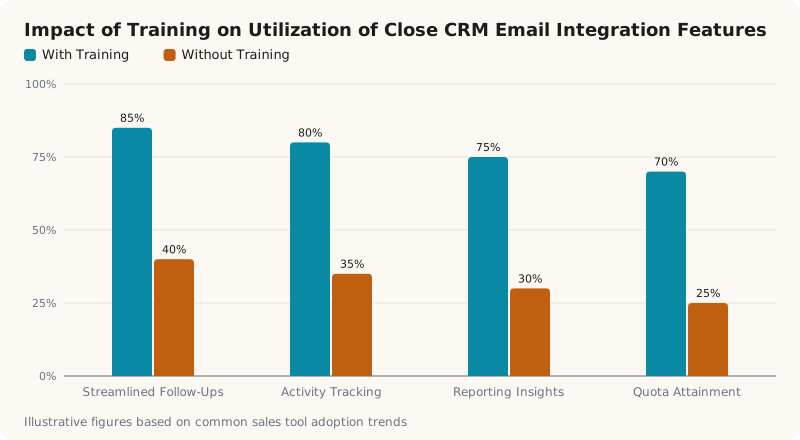
At Sales Bullseye, our sales training programs focus on practical adoption of tools like Close CRM alongside sales methodology coaching. We teach reps how to leverage email sync features fully and incorporate communication data into disciplined sales processes. This generates sustainable productivity gains beyond mere technical setup.
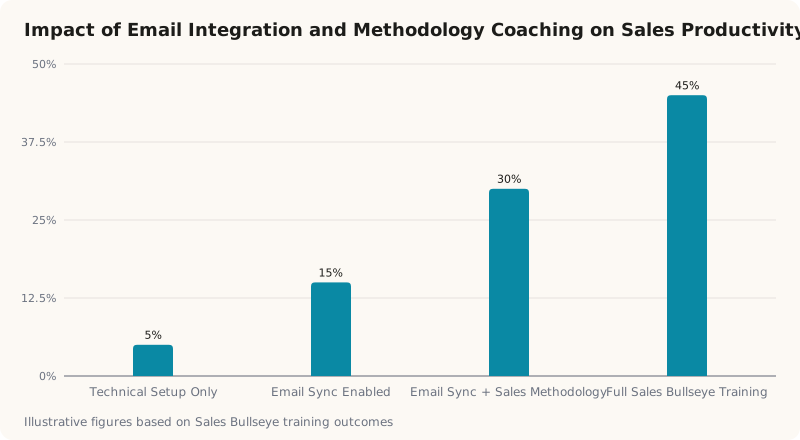
Getting your sales email setup right, paired with targeted training and coaching, results in a sales force that's efficient, data-driven, and ready to close deals faster.
Ready to Audit Your Pipeline?
Get a high-level Training Needs Assessment for your sales organization.
About Nabeel Khalid
Nabeel is the founder of Sales Bullseye. He has trained hundreds of B2B sales professionals across Pakistan and the United States in the Bullseye Method — a high-integrity, methodology-led approach to complex deal closure built on retention, not one-off workshops.