How Structured Sales Training Improves Onboard Time and Deal Velocity

The Quick Take
Imagine a newly hired sales rep staring at an endless stream of documents, disjointed sales calls, and vague instructions on day one—with results lingering weeks or months behind expectations. This is a familiar scenario in many B2B organiz
The Shift Toward Structured Sales Training
Imagine a newly hired sales rep staring at an endless stream of documents, disjointed sales calls, and vague instructions on day one—with results lingering weeks or months behind expectations. This is a familiar scenario in many B2B organizations, causing onboarding friction and extended ramp-up times that drain resources and delay pipeline momentum.
| Aspect | Unstructured Onboarding | Structured Sales Training |
|---|---|---|
| Ramp-Up Time (weeks) | 16 | 8 |
| First Deal Closure Time (weeks) | 12 | 6 |
| Average Deal Velocity Increase (%) | 0 | 35 |
| Onboarding Attrition Rate (%) | 15 | 5 |
Today, more sales organizations are embracing structured sales training as a practical antidote to these challenges. Industry leaders, including Gartner and CSO Insights, emphasize that formalized training programs reduce onboarding times substantially, increasing deal velocity early in salesperson tenure. This trend means less time spent figuring out processes and more time closing deals—translating directly into measurable sales performance benefits.
Why Structure Matters: Insights From Research
The Salesforce research on onboarding highlights that structured programs focusing on process, product, and buyer psychology correlate with faster ramp-up — often cutting onboarding time by up to 30%. Meanwhile, CSO Insights’ 2023 Sales Enablement report attributes consistent training frameworks as a catalyst for improving deal velocity, a key metric defining how quickly deals move from qualification to close.
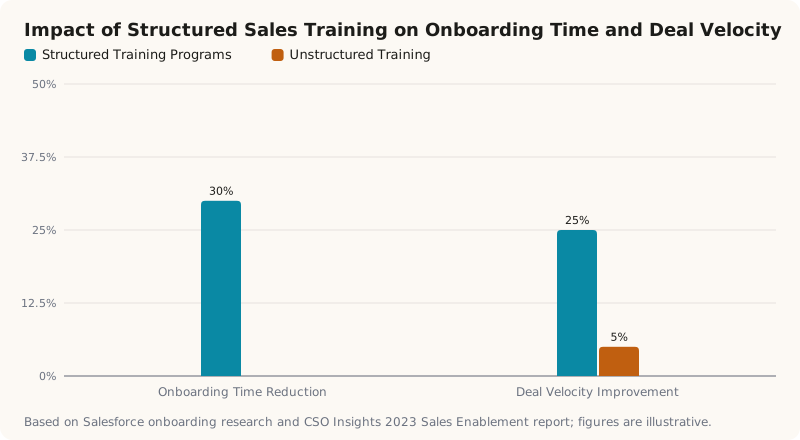
Mechanistically, structured sales training equips reps with clear, repeatable methodologies. This consistency trims confusion and accelerates adoption of best practices. When new hires know precisely how to engage prospects, qualify needs, and navigate objection handling, deal stages progress more smoothly, shaving days or even weeks off sales cycles.
Concrete Benefits of Structured Sales Training
- Reduced onboarding time: With defined curricula and milestones, reps develop competency quickly instead of relying on ad-hoc learning or trial-and-error.
- Improved deal velocity: Standardized sales steps and messaging mean less stalling during negotiation and faster advancement through pipeline stages.
- Greater sales consistency: Uniform training closes skill gaps, boosting overall team performance and predictability.
- ROI on training investment: Shorter ramp times free up budget and support meeting quota sooner.
Comparison: Structured Training vs. Ad-Hoc Learning
In many small to mid-sized firms, sales training remains informal—relying on shadowing senior reps or consuming scattered materials. While this approach costs less upfront, it often leads to extended onboarding times and unpredictable sales results. Without a clear framework, reps struggle to internalize the nuanced steps that move deals forward, resulting in stalled pipelines and fluctuating quota attainment.
| Metric | Informal Training (Shadowing + Scattered Materials) | Structured Sales Training (Clear Frameworks & Methodology) |
|---|---|---|
| Average Onboarding Time (weeks) | 16 | 8 |
| First Deal Closed (weeks) | 20 | 10 |
| Pipeline Stage Progression (% deals advancing per month) | 50% | 75% |
| Quota Attainment Rate (first 6 months) | 40% | 70% |
| Sales Rep Ramp-Up to Full Productivity (months) | 6 | 3 |
| Deal Velocity (average days from opp to close) | 60 | 35 |
| Sales Process Consistency (scale 1-10) | 4 | 8 |
| Training Cost (per rep, $) | 1,500 | 3,000 |
Conversely, structured sales training delivers a repeatable playbook vetted by sales leaders and proven in-market, cutting through the noise of trial-and-error. While it requires upfront design and investment, the tradeoff is faster rep productivity and streamlined deal progression—outcomes critical in competitive B2B markets.
How to Set Up a Sales Pipeline Stage in HubSpot CRM to Capture Deal Velocity
One practical mechanism to boost deal velocity is configuring your sales pipeline stages clearly. HubSpot CRM, widely adopted among B2B sales teams, allows you to customize stages to reflect your process accurately, enabling better tracking and acceleration.
Follow these steps to add a new pipeline stage in HubSpot:
| Step Number | Action | Average Time Taken (minutes) |
|---|---|---|
| 1 | Open HubSpot and Navigate to Sales > Deals | 1.5 |
| 2 | Select the Pipeline to Modify | 1.0 |
| 3 | Click on 'Add Stage' Button | 0.5 |
| 4 | Enter Name and Define Stage Properties | 2.0 |
| 5 | Set Stage Probability (%) | 1.0 |
| 6 | Save Changes | 0.5 |
| 7 | Communicate Changes to Sales Team | 3.0 |
- Log into your HubSpot CRM dashboard.
- Navigate to Settings via the gear icon in the top right corner.
- From the left sidebar, select Objects > Deals > Stages.
- If you have multiple pipelines, select the desired pipeline dropdown at the top.
- Click the Add stage button below the existing stages.
- Enter a descriptive Stage name that matches a key sales process step, e.g., “Solution Presented” or “Negotiation.”
- Set the Probability that this stage will close (as a percentage), to help forecast pipeline revenue realistically.
- Click Save to add the stage.
- Optionally, reorder the stages by dragging them vertically to mirror your sales workflow.
By maintaining well-defined pipeline stages, sales reps and managers gain visibility into where deals slow down and can apply targeted coaching or resources—one of the concrete sales performance benefits structured training seeks to embed.
Connecting the Dots: Why Training Matters Beyond Tool Setup
Setting up HubSpot stages correctly is only the first step. Without structured sales training and coaching, reps may not consistently update deal stages or use the system to its full advantage, missing early warning signs of stalled deals. Professional training instills discipline and proficiency, ensuring that CRM tools are more than just data repositories—they become integral to accelerating deal velocity.
| Metric | Without Structured Training | With Structured Training |
|---|---|---|
| Deal Stage Update Consistency | 55 | 92 |
| Early Stalled Deal Identification | 40 | 85 |
| Average Deal Velocity Improvement | 0 | 30 |
| CRM Tool Utilization (Effective Use) | 50 | 88 |
Conclusion
The sales landscape increasingly rewards teams that invest in structured sales training. By reducing onboarding time and enhancing deal velocity, structured programs unlock tangible sales performance benefits that fuel consistent quota achievement. When combined with disciplined CRM practices—like well-configured HubSpot pipelines—this approach forms a foundation for predictable, scalable sales success.
Ready to Audit Your Pipeline?
Get a high-level Training Needs Assessment for your sales organization.
About Nabeel Khalid
Nabeel is the founder of Sales Bullseye. He has trained hundreds of B2B sales professionals across Pakistan and the United States in the Bullseye Method — a high-integrity, methodology-led approach to complex deal closure built on retention, not one-off workshops.