How Sales Coaching Transforms Teams

The Quick Take
Imagine a sales team that struggles month after month to meet targets. The pressure builds, frustration mounts, and performance stagnates. Now consider a different scenario: a team that undergoes targeted sales coaching, implementing tailor
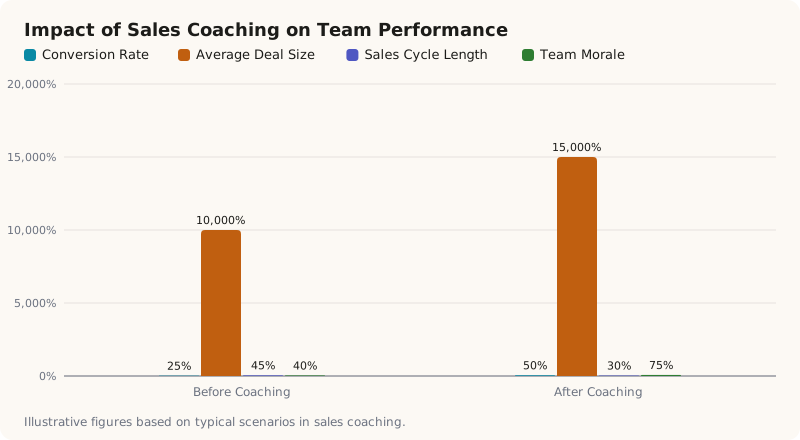
Imagine a sales team that struggles month after month to meet targets. The pressure builds, frustration mounts, and performance stagnates. Now consider a different scenario: a team that undergoes targeted sales coaching, implementing tailored strategies, and significantly improving their conversion rates. What makes the difference? The answer lies in the evolving approach to sales coaching.
1. The Shift Towards Personalized Sales Coaching
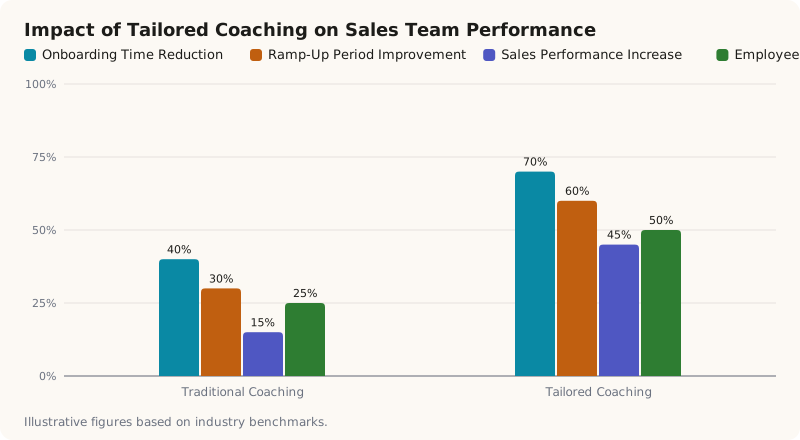
Recent trends highlight a significant pivot in how organizations view sales coaching. A cookie-cutter approach—where all sales reps receive the same training regardless of their specific challenges and market conditions—is proving insufficient. Research indicates that personalized coaching can yield superior results. For instance, teams that implement customized coaching strategies see up to a 20% increase in their sales performance.
2. Concrete Benefits of Specialized Coaching
What concrete benefits does tailored coaching offer? For one, it accelerates learning. When sales reps receive coaching that directly aligns with their individual skill gaps and the unique demands of their target market, they learn faster. This translates into shorter onboarding times and quicker ramp-up periods. In environments like DHA Phase 2 Lahore, where competition is fierce, having a well-trained team can be the defining factor that sets a sales team apart.
3. Research-Backed Effectiveness
A growing body of research supports the assertion that effective sales coaching leads to improved outcomes. A study conducted by the Sales Management Association revealed that organizations with dedicated coaching programs achieve a 16% increase in sales productivity compared to those without structured coaching. This is particularly relevant for sales teams looking to penetrate niche markets.
4. Practical Tips for Implementing Sales Coaching
When considering how to implement effective sales coaching in your team, start by conducting a gap analysis. Evaluate team members' current skill levels against the skills required to excel in their roles. This analysis not only identifies areas for improvement but also highlights strengths that can be leveraged for greater impact.
| Skill Category | Current Skill Level (%) | Required Skill Level (%) | Gap (%) |
|---|---|---|---|
| Prospecting | 60 | 80 | 20 |
| Negotiation | 70 | 90 | 20 |
| Closing | 65 | 85 | 20 |
| Relationship Building | 75 | 85 | 10 |
| Product Knowledge | 80 | 90 | 10 |
| Customer Understanding | 70 | 80 | 10 |
| Sales Technology | 50 | 75 | 25 |
| Time Management | 60 | 70 | 10 |
Follow these steps to enhance your coaching program:
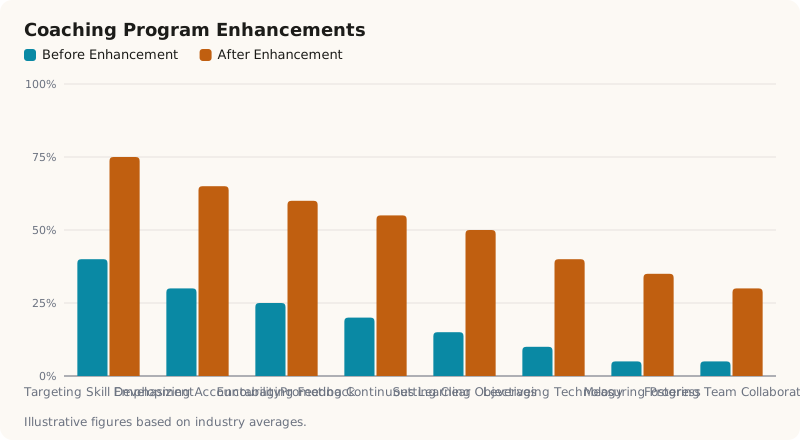
- Set Clear Goals: Define what success looks like for your sales team. Are you aiming for higher close rates, improved lead generation, or enhanced customer relationships?
- Utilize Role-Playing: Create real-life scenarios similar to what your team encounters in the field. Role-playing builds confidence and hones skills.
- Regular Feedback Loops: Establish a routine for providing constructive feedback. Regular check-ins encourage ongoing development and indicate to your team that their improvement is a priority.
5. Adapting to Market Needs
In a fast-evolving market like that of Lahore, the agility to adapt coaching methods is crucial. Sales coaching should be flexible enough to incorporate emerging trends and customer behaviors. For instance, if your sales team starts facing objections related to pricing or product features, it’s essential to refine the coaching focus to address these objections head-on.
6. The ROI of Investing in Sales Coaching
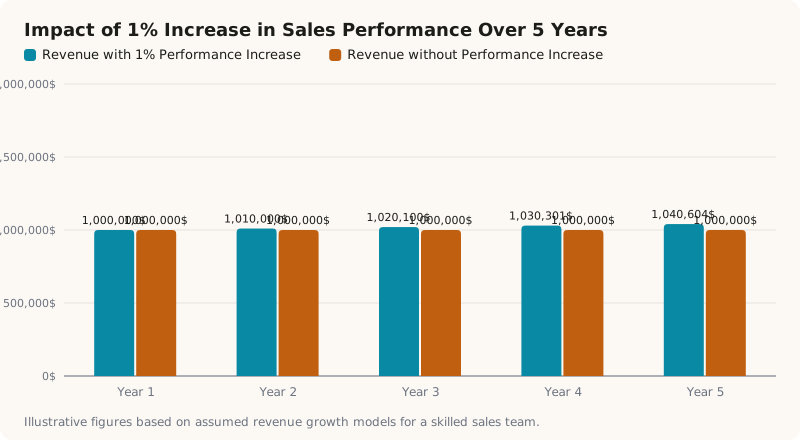
Investing in rigorous sales coaching may seem significant upfront, but the long-term advantages outweigh initial costs. Broken down, a 1% increase in sales performance can multiply revenue significantly over time, especially when compounded across a skilled sales team. This indicates that strategically positioned sales coaching isn’t just an expense—it’s an investment into your company’s future.
Conclusion
Ultimately, the effectiveness of sales coaching is not merely about imparting knowledge but about revitalizing a team’s approach to sales. With tailored strategies designed for each rep and an emphasis on continuous development, the benefits are clear. In the competitive landscape of DHA Phase 2 Lahore, where every edge counts, effective sales coaching could be the key to turning challenges into opportunities.
Ready to Audit Your Pipeline?
Get a high-level Training Needs Assessment for your sales organization.
About Nabeel Khalid
Nabeel is the founder of Sales Bullseye. He has trained hundreds of B2B sales professionals across Pakistan and the United States in the Bullseye Method — a high-integrity, methodology-led approach to complex deal closure built on retention, not one-off workshops.