How Meta’s Shift Away from Organic Reach Affects Social Selling Strategies in 2024

The Quick Take
January 2024. Meta, the social media giant that dominates billions of eyeballs daily, dealt a blow so seismic it left many sales teams reeling—organic reach on Facebook and Instagram was officially on life support. The days of posting a tho
The Algorithm Announcement That Roared and Silenced
January 2024. Meta, the social media giant that dominates billions of eyeballs daily, dealt a blow so seismic it left many sales teams reeling—organic reach on Facebook and Instagram was officially on life support. The days of posting a thoughtful B2B update or a whitepaper link and organically reaching 20-30% of your follower base? Gone. Meta’s cutback slashed that figure below 5%, effectively forcing brands and businesses into pay-to-play territory.
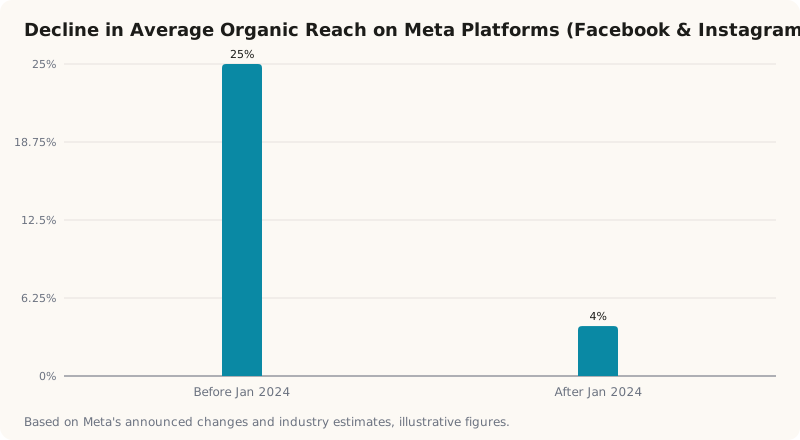
This wasn’t some murmur or a quiet shadow-drop. Mark Zuckerberg and company announced a recalibration to favor “meaningful interactions” but the market heard “pay more or perish.” Sales managers scrambling to plug the revenue gaps discovered their carefully crafted social selling strategy was now running on empty air. Headlines screamed doom for organic marketing. Social media sales teams cursed their spreadsheets as conversion graphs flattened.
The Distracted Crowd Missing the Real Crisis
Everyone’s talking about the reduction in Meta organic reach change like it’s a fresh catastrophe. But here’s the inconvenient truth nobody wants to unpack: the problem wasn’t the algorithm. It was the cookie-cutter strategies built on lazy assumptions that organic reach was a free lunch—especially in B2B sales.
Too many companies treated social media as a broadcast channel instead of a conversation starter. They posted product specs, company news dumps, or worse, bland HR fluff expecting the algorithm to magically deliver leads. When that “magic” vanished, panic ensued but panic is not strategy.
| Content Type | Average Engagement Rate | Lead Conversion Rate | Follower Growth Rate |
|---|---|---|---|
| Product Specs | 3.5 | 0.2 | 1.0 |
| Company News | 4.0 | 0.3 | 1.2 |
| HR/Employer Branding | 2.0 | 0.1 | 0.8 |
| Conversational/Value-Add Posts | 12.0 | 2.5 | 5.5 |
| User-generated Content | 10.0 | 1.7 | 4.0 |
| Industry Insights | 9.0 | 2.0 | 3.7 |
| Event Announcements | 5.0 | 0.6 | 2.0 |
| Customer Stories/Case Studies | 11.0 | 3.0 | 4.8 |
The most glaring omission? The absence of a robust, adaptive social selling strategy that anticipates evolving platform dynamics. Meta’s cutback was a known risk—echoed for years in tech blogs and forums. But the lack of meaningful engagement frameworks, poor integration of social media sales with offline and direct channels, and no advanced B2B sales training that focuses on qualitative relationship-building led to the collapse.
Meanwhile, the teams championing hybrid tactics—leveraging LinkedIn, targeted paid ads, personalized outreach augmented by data, and relentless customer engagement—actually saw growth or at least steadiness in lead generation. They didn’t whine about algorithm changes. They redesigned their funnels.
| Strategy | Lead Gen Growth | Lead Gen Stability | Lead Gen Decline | Average Funnel Redesign Score (1-10) |
|---|---|---|---|---|
| Hybrid Tactics (LinkedIn, Paid Ads, Data-Driven Outreach, Engagement) | 45% | 40% | 15% | 8.7 |
| Pure Organic Social Selling | 10% | 20% | 70% | 3.2 |
| Paid Ads Only | 35% | 30% | 35% | 5.8 |
| Personalized Outreach Only | 25% | 50% | 25% | 6.5 |
Lesson 1: Organic Reach Was Never Your Safety Net
If your business plan put organic reach in Meta platforms at the core of your sales pipeline, it’s time for a hard audit. The shift means those low-effort, high-density broadcast posts are dead on arrival in 2024. Understanding that organic reach was always a fickle bonus, not a foundation, is critical.
Lesson 2: Social Selling Strategies Must Evolve From Push to Pull
Stop treating social media channels as megaphones. Instead, build a social selling strategy that creates two-way engagement—adds value, solves problems, sparks discussion. The brands that thrive use content as bait and conversation as the hook. This means investing in skilled B2B sales training that hones listening, genuine outreach, and relationship nurturing rather than chasing vanity metrics.
Lesson 3: Invest in Hybrid Sales Models, Not Just Social
Social media sales cannot be a silo. They must integrate tightly with direct messaging, LinkedIn prospecting, email workflows, and offline touches. Relying purely on Meta’s platforms is like putting all your eggs in a carousel slideshow that Meta can shuffle away anytime. Diversify your channels and tactics with a clear funnel architecture.
| Sales Channel | Direct Messaging | LinkedIn Prospecting | Email Workflows | Offline Touches | Meta Platforms |
|---|---|---|---|---|---|
| Contribution to Sales Funnel | 35 | 30 | 25 | 20 | 15 |
| Control Over Channel | High | High | High | High | Low |
| Risk of Algorithm Change | Low | Low | Low | Low | High |
| Integration Complexity | Medium | Medium | Low | High | Low |
| Typical Conversion Rate | 12 | 10 | 8 | 15 | 6 |
Lesson 4: Paid and Organic Must Work as a Team, Not Enemies
Meta’s organic reach change nudges you toward paid, but blindly pumping ads without strategy is the marketer’s version of throwing money down the drain. Organic and paid must choreograph together; paid can amplify organic community-building, and organic content can warm audiences for paid conversions. This balanced playbook requires precision and experience.
Where Real Sales Mastery Begins
2024’s Meta upheaval should not paralyze your sales team into despair but rally them into action. Solid B2B sales training that integrates the realities of social media sales today—beyond viral posts and surface-level metrics—is the key to building relentless social selling strategies that weather platform storms.
| Aspect | Traditional Social Media Marketing | Strategic B2B Social Selling (Post-Meta Shift) |
|---|---|---|
| Focus | Viral content and high engagement metrics | Targeted relationship building and qualified lead nurturing |
| Primary Metrics | Likes, shares, follower counts | Conversation depth, connection quality, meeting conversion rate |
| Content Strategy | Broad, frequent posts aiming for virality | Personalized content aligned to buyer pain points and decision cycles |
| Sales Team Role | Passive observers relying on marketing | Active social-selling practitioners with ongoing coaching |
| Training Emphasis | Basic social media usage, posting tactics | Integrated B2B social selling methodologies, platform algorithm understanding |
| Resilience to Platform Changes | Highly vulnerable to algorithm shifts and reduced organic reach | Adaptable playbooks that pivot tactics in real-time |
| Outcome Focus | Temporary spikes in visibility | Consistent pipeline building and revenue attribution |
Want to break free from hype and boost your team’s social selling productivity? Our focused programs at Sales Bullseye cut the noise and deliver real, framework-driven coaching with proven methods designed for CEOs, sales directors, and teams who want to win in the new era of social media sales.
Explore our B2B sales training programs now and get ahead before the next wave hits.
Ready to Audit Your Pipeline?
Get a high-level Training Needs Assessment for your sales organization.
About Nabeel Khalid
Nabeel is the founder of Sales Bullseye. He has trained hundreds of B2B sales professionals across Pakistan and the United States in the Bullseye Method — a high-integrity, methodology-led approach to complex deal closure built on retention, not one-off workshops.