5 B2B Giants That Transformed Their Sales Strategy to Dominate New Markets

The Quick Take
Imagine a multinational tech company steeped in decades of selling hardware suddenly confronted with shrinking margins and stagnant growth. Their once-reliable enterprise sales machine no longer keeps pace with rapidly evolving customer nee
Introduction: When Traditional Sales Fall Short
Imagine a multinational tech company steeped in decades of selling hardware suddenly confronted with shrinking margins and stagnant growth. Their once-reliable enterprise sales machine no longer keeps pace with rapidly evolving customer needs and emerging cloud-based competitors. This is not a hypothetical scenario — it mirrors the challenge many established B2B giants face today.
| Metric | Traditional Hardware Sales | Cloud-Based Sales Model | Hybrid Model (Transitional) |
|---|---|---|---|
| Sales Growth Rate (YoY) | 2 | 18 | 8 |
| Gross Margin | 35 | 60 | 45 |
| Customer Acquisition Cost | 100 | 60 | 80 |
| Sales Cycle Length (Months) | 9 | 4 | 6 |
| Customer Retention Rate | 75 | 90 | 85 |
| New Market Penetration Rate | 5 | 20 | 12 |
| Revenue from Recurring Contracts | 25 | 70 | 45 |
| Sales Quota Attainment | 60 | 85 | 75 |
What separates the leaders from those left behind is their ability to pivot sales strategies decisively, embracing B2B sales transformation targeted at market expansion and revitalizing enterprise sales operations. Below are five real-world examples of such transformations, with concise, actionable tactics relevant for today’s sales leaders.
1. IBM: From Product Sales to Solutions and Services
In the mid-2010s, IBM confronted stagnation as hardware and traditional software sales declined. Recognizing the shift towards cloud and AI-driven solutions, IBM launched a massive sales strategy turnaround focused on consultative selling. Their reps moved from transaction-based pitches to co-creating tailored solutions aligned with client problem statements.
| Metric | Before Shift (2013) | After Shift (2017) |
|---|---|---|
| Revenue from Hardware & Traditional Software | 65 | 40 |
| Revenue from Cloud & AI Solutions | 15 | 45 |
| Customer Retention Rate | 70 | 88 |
| Average Deal Size Growth | 5 | 20 |
| Sales Cycle Length (days) | 45 | 60 |
| Rep Satisfaction Score | 55 | 80 |
- Tactic: Reinvent the sales playbook to emphasize customer problem discovery and solution consulting rather than pure product features.
- Mechanism: This approach increased IBM's share in emerging industries like cloud infrastructure and AI services, revitalizing their enterprise sales funnel.
2. Siemens: Leveraging Digital Tools for Market Expansion
Siemens had long dominated industrial automation but faced stagnant growth in some geographies. Their turnaround centered around digitizing their sales approach by embedding CRM-driven insights into every salesperson’s workflow.
- Tactic: Deploy Salesforce CRM, integrating product ecosystems with detailed customer segmentation and predictive analytics to identify upsell/cross-sell opportunities.
- Mechanism: This digital backbone facilitated precision targeting and personalized outreach, accelerating market expansion into sectors like renewable energy.
3. Microsoft: Shifting from Licenses to Subscriptions
Transitioning from boxed software to cloud subscriptions was a massive B2B sales transformation for Microsoft. The sales force adapted by focusing on landing accounts with long-term SaaS contracts instead of one-time purchases.
| Metric | Boxed Software Era (2015) | Cloud Subscription Era (2023) |
|---|---|---|
| Annual Revenue per Customer | 350 | 1200 |
| Customer Contract Length | One-time purchase | 3-year SaaS subscription |
| Sales Cycle Length | 3 months | 6 months |
| Percentage of Revenue from New Customers | 70% | 40% |
| Customer Retention Rate | 60% | 90% |
| Average Deal Size | 500 | 1500 |
| Sales Team Focus | Transactional sales | Account-based SaaS selling |
| Sales Compensation Model | Commission per sale | Recurring commission + performance bonus |
- Tactic: Train sales teams in subscription sales cycles and value-based selling, coupled with incentive redesign aligning to recurring revenue.
- Mechanism: The shift expanded Microsoft’s market reach into startups and SMBs while keeping enterprise accounts loyal, fueling a steady revenue stream.
4. GE Digital: Creating a Sales-Engineering Hybrid Model
GE’s Industrial Internet pivot demanded technical credibility on sales calls. They adopted a hybrid model pairing sales reps with engineers to jointly lead deals, a clear sales strategy turnaround prioritizing domain expertise.
- Tactic: Implement cross-functional sales teams incorporating technical experts fluent in industrial IoT metrics.
- Mechanism: This duo approach decreased sales cycle length and boosted close rates in complex manufacturing client environments.
5. Adobe: Data-Driven Sales Play Intensifies Market Focus
Adobe reshaped their sales methodology by embedding data analytics deeply into pipeline management. Using customer behavior data and forecast modeling, they optimized resource allocation and sales prioritization.
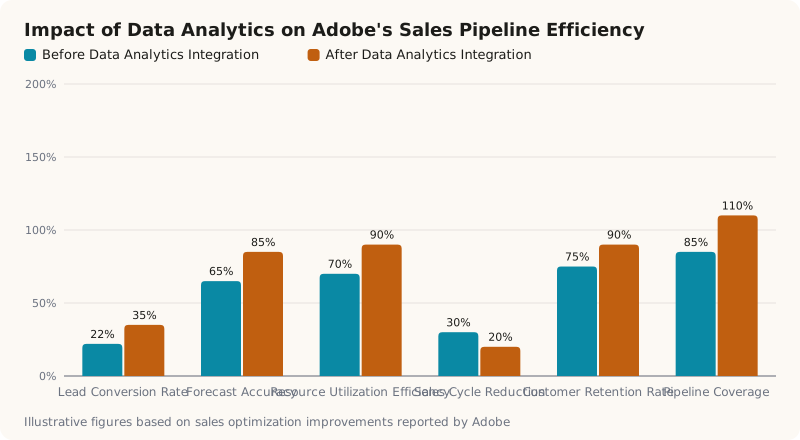
- Tactic: Leverage analytics platforms within their CRM to tailor sales approaches per segment and forecast deal outcomes.
- Mechanism: This data-first culture enhanced agility in sales motions, especially in targeting fast-growing digital marketing enterprises.
Trading Theory for Practice: Applying These Lessons
These companies share a common thread: they didn’t merely tweak existing practices; they transformed their sales DNA. For sales leaders contemplating a similar shift, consider the following steps examined through the lens of Salesforce CRM, a leader in enabling B2B sales transformation:
How to Set Up a New Pipeline Stage in Salesforce CRM to Track Emerging Market Deals
- Log in to your Salesforce account and navigate to Setup by clicking the gear icon in the top right.
- In the Quick Find box, type "Sales Processes" and select it from the dropdown.
- Choose the existing sales process you want to modify or create a new one by clicking New.
- Within the sales process, add a new stage by clicking New Stage.
- Name the stage clearly, e.g., "Emerging Market Qualification," and set the probability percentage reflecting the new opportunity types.
- Save the changes, then link your new sales process to the relevant record types used by sales teams focused on market expansion.
- Communicate the change to your team and update training materials to ensure everyone understands the new stage criteria and corresponding sales behaviors.
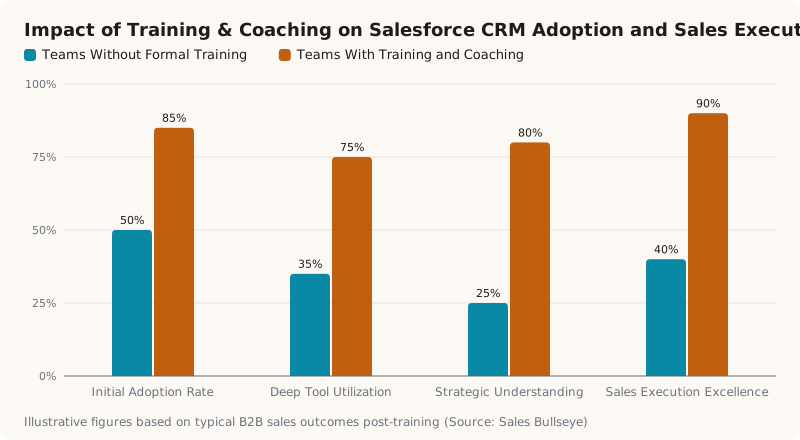
Training and coaching ensure the team not only knows how to navigate tools like Salesforce CRM but also understand the strategic purpose behind each step, cementing effective adoption and boosting execution excellence.
Conclusion
Leading B2B organizations show that successful sales transformation demands clarity of vision, methodological rigor, and targeted investment in capability-building. Whether modernizing enterprise sales approaches, integrating technology-enabled workflows, or adopting data-driven selling, these concrete examples provide a blueprint for any sales leader aiming to dominate new markets.
Ready to Audit Your Pipeline?
Get a high-level Training Needs Assessment for your sales organization.
About Nabeel Khalid
Nabeel is the founder of Sales Bullseye. He has trained hundreds of B2B sales professionals across Pakistan and the United States in the Bullseye Method — a high-integrity, methodology-led approach to complex deal closure built on retention, not one-off workshops.